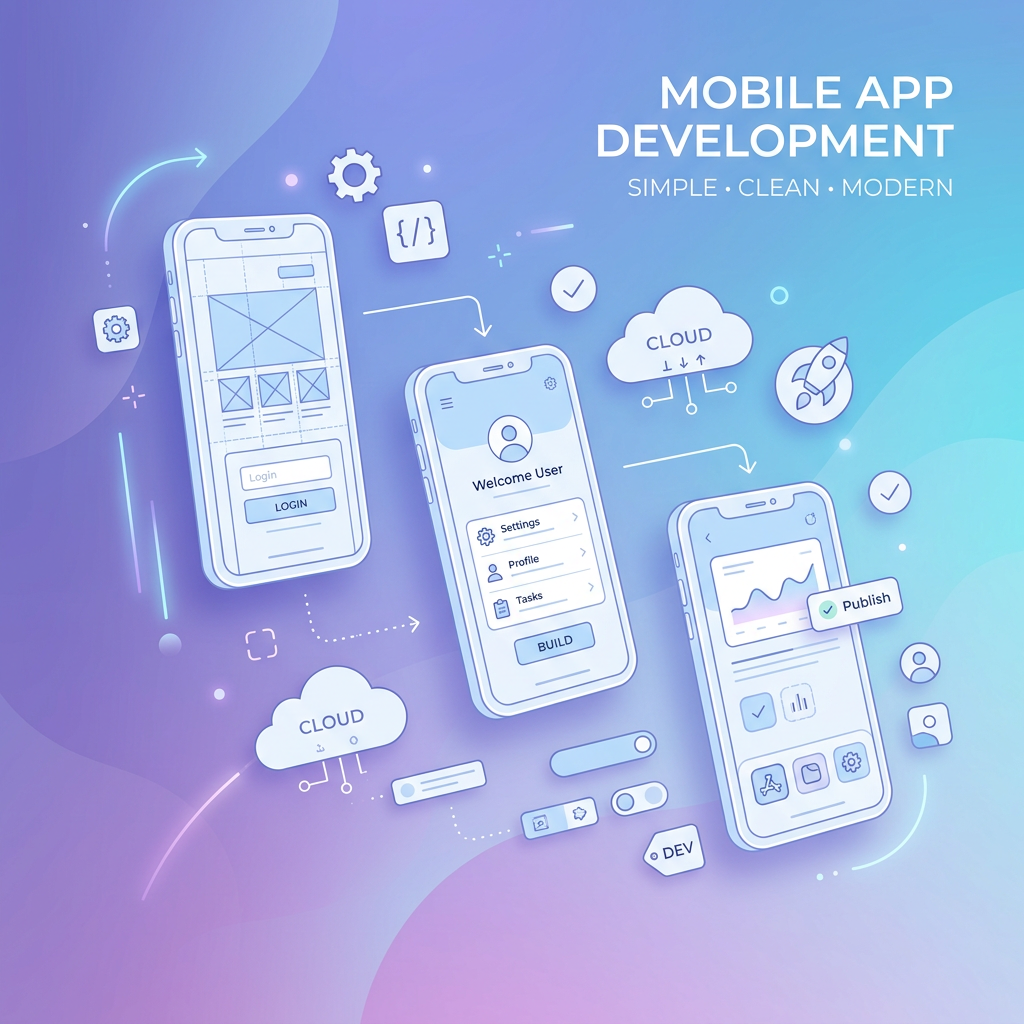
From cross-platform frameworks to AI-powered UX personalization, the mobile development landscape is evolving rapidly. Here's what developers and product teams need to know.
Mobile applications continue to be a primary interface between businesses and their customers. In 2025, several converging trends are reshaping how teams build, deploy, and evolve mobile products.
Cross-Platform Maturity
React Native and Flutter have both reached levels of maturity where choosing native development requires justification. Performance gaps have narrowed significantly, ecosystem support is rich, and developer productivity advantages are substantial. Most new mobile projects at BIORBIT default to cross-platform unless there's a compelling native requirement.
AI-Powered UX Personalization
On-device machine learning — driven by Apple's Core ML and Google's ML Kit — enables apps to personalize the user experience without sending sensitive data to the cloud. From smart notification timing to adaptive UI layouts, these capabilities are becoming table stakes for consumer applications.
App Clips and Instant Apps
Frictionless entry points — Apple App Clips and Google Instant Apps — are gaining traction in commerce, hospitality, and healthcare. These lightweight experiences allow users to access core app functionality without a full install, dramatically reducing conversion barriers.
Security and Privacy First
With regulators increasingly focused on mobile data practices, privacy-by-design is essential. End-to-end encryption, biometric authentication, and transparent data handling are baseline expectations. BIORBIT's mobile practice includes security review as a standard part of every engagement.